
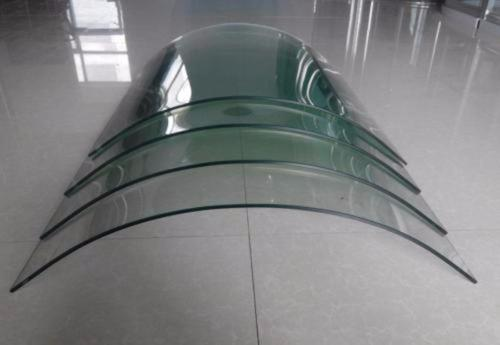
On the line, safety glass cutting can’t afford uneven heat. When the knife has to score tempered or laminated glass, the heater needs to nail the temperature fast and hold it steady. Wait around, and you’re making scrap. Overshoot, and you’re planting micro-cracks that show up later—in tempering, in bending, or in the field. What matters under the hood We built the safety glass cutting heater around short-wave infrared quartz emitters, because they respond quickly and give you tight control. They run on 230/400 V inputs, with power densities matched to the line’s duty cycle. Across the cutting zone, the thermal field stays uniform, so you don’t get local hot spots that push the glass into thermal stress. We tune emissivity for coated glass, so the heat goes right into the surface instead of bleeding off through convection. The unit drops in as a module, with standard connectors and mounting that lines up with common OEM cutting tables. Why this plays on the floor You get repeatable cycles. The heater hits setpoint in seconds, so the cutting head doesn’t sit idle. That keeps throughput steady on tempered glass runs and keeps edge defects from creeping in when the response lags. Energy use drops, too, because the emitters only run when they’re needed—no constant soak. In lamination prep, consistent preheat cuts down bubble risk and gives you a cleaner bond line. Fewer rejects, less rework, and a safer line because operators aren’t dealing with temperature swings. The details that keep it honest Installation is straightforward, but alignment is everything. The emitter array has to be parallel to the glass surface; even a small angle shifts the thermal profile and can make scoring uneven. Keep the quartz tubes clean—dust and oil mist will cost you—and plan replacements around your maintenance window. If you switch glass types often, pair the heater with a simple profile memory. That way you can change settings without guesswork, and keep the line moving.